
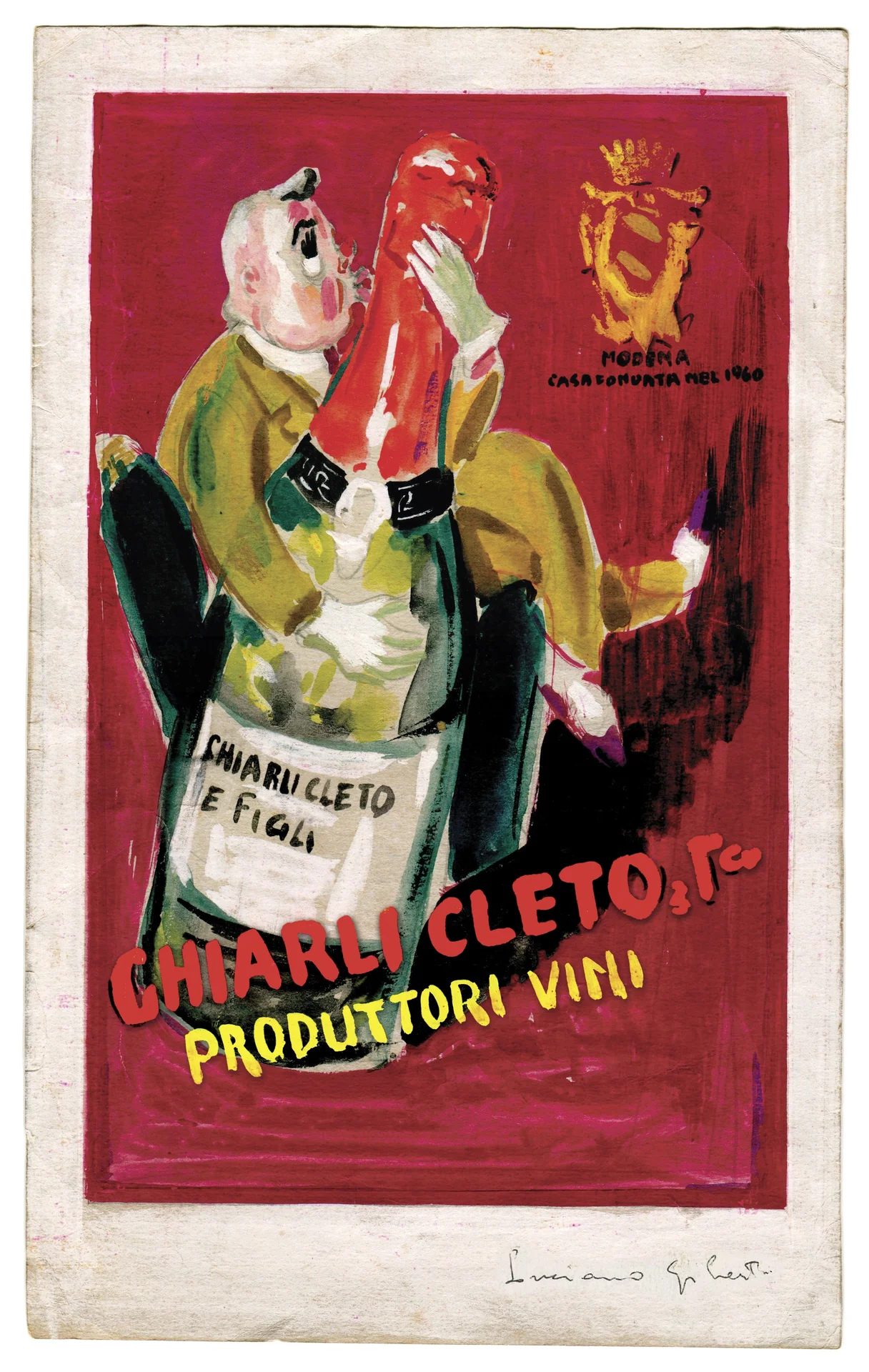
Il Bacio: a 1960 kiss for Modena's restaurateurs
Once a year, the people who spend their days cooking for others sit down and are served. Anselmo Chiarli launched the Cena dei Ristoratori in 2004, building on an idea from three people: Roberto Saletta, Chiarli's commercial director; Nano Morandi of Salumeria Giusti, Matteo Morandi's father; and the sales agent Stefano Manni.
Ten restaurants came to that first dinner. It was cooked in the kitchen of Villa Cialdini, with Hosteria Giusti at the stove, and only the aperitivo was held in the Scuderia. Now in its twenty-first edition, after a two-year break for the pandemic, the dinner brings together 35 restaurants and more than 60 guests. Invitations still go through one person, Stefano Manni, and the format is the same as on the first night: one chef, chosen from among the guests, cooks for everyone else.
This year's chef is Fabio Troilo of the Antica Trattoria La Busa, run by the Guerri family and open since 1960, the year Giberti painted Il Bacio. Tortellini in capon broth with Lambrusco del Fondatore, and ricotta and spinach tortelloni in butter and sage with Pignoletto Colli Bolognesi. Next is the bollito trolley with salsa verde and mostarda, served with Vigneto Cialdini, the Grasparossa that has just won Tre Bicchieri from Gambero Rosso. Dessert is stracchino della duchessa with a Romagna Passito. Quintopasso Metodo Classico is poured at the aperitivo.
Cooking for colleagues is the hardest service of the year. The guests know how a kitchen runs, what goes into a single dish, and how difficult it is to build a menu with quality and style. They read a menu the way a winemaker reads a vintage.
Conversation starts quickly. Guests compare notes on suppliers, recommend young cooks, and borrow a recipe to bring it back a year later with a new idea added. Chefs everywhere are talking about community, the shared table, and the real value of food and of eating together, in a trade that grows more complicated each year and depends more and more on screens and review-site rankings. At Villa Cialdini, more than 35 chefs have been meeting at the same table since 2004, one night a year, with Lambrusco poured by the family that makes it.
Each guest takes home a print to hang in their restaurant. The images have always come from Chiarli's history, and Il Bacio is the twentieth.
It comes from the family archive. In 1960, with Modena at the height of the economic boom, the artist and graphic designer Luciano Giberti painted a poster for Chiarli Cleto e Figli to mark the company's hundredth anniversary, as a personal tribute to the brothers Giovanni and Giorgio Chiarli, who had led the firm to that milestone. He called it Il Bacio. Against a vermilion background, a beaming figure kisses a bottle of Lambrusco with the Chiarli Cleto e Figli label and a red capsule. Giberti's signature is clearly visible at the bottom.
Giberti (1921–2011) helped shape the look of postwar Modena. A painter, graphic designer and decorator, he worked closely with the rationalist architects who rebuilt the city, especially his lifelong friend Vinicio Vecchi. Much of his work is still there: the entrance window of the Cinema Principe; the ceramic mosaic on the history of cinema in the lobby of the former Cinema Olympia, saved from demolition by Italia Nostra; the large panel in the lobby of the Palazzo di Giustizia on Corso Canalgrande; and the aluminum reliefs on doors across the city. In 1951 he and Cattini signed the poster for the Nuovo Mercato Bestiame (meat market), with its bright, festive bulls. He also designed the symbol of the Consorzio del Lambrusco, the logo for Ciliegia di Vignola (a protected local cherry variety), and many others.